
Seven-Year Cycles · the wave of life’s phases · 0–14 years · 1st and 2nd cycles
Children: the sea is a living backyard
In the 1st cycle the world enters through the body; in the 2nd, through imagination. With little ones we don’t teach classes — we play. In Noronha’s shallow, sheltered waters, the child discovers that the sea is a living backyard, and parents rediscover childhood.
The cycle, from within
Anthroposophy reads childhood in two seven-year cycles. In the first (0–7), the child is all sense organ: the world enters through the body, through touch, through rhythm. What she needs is good example and a safe environment to imitate. In the second (7–14), imagination awakens: the world arrives in images, stories and adventures.
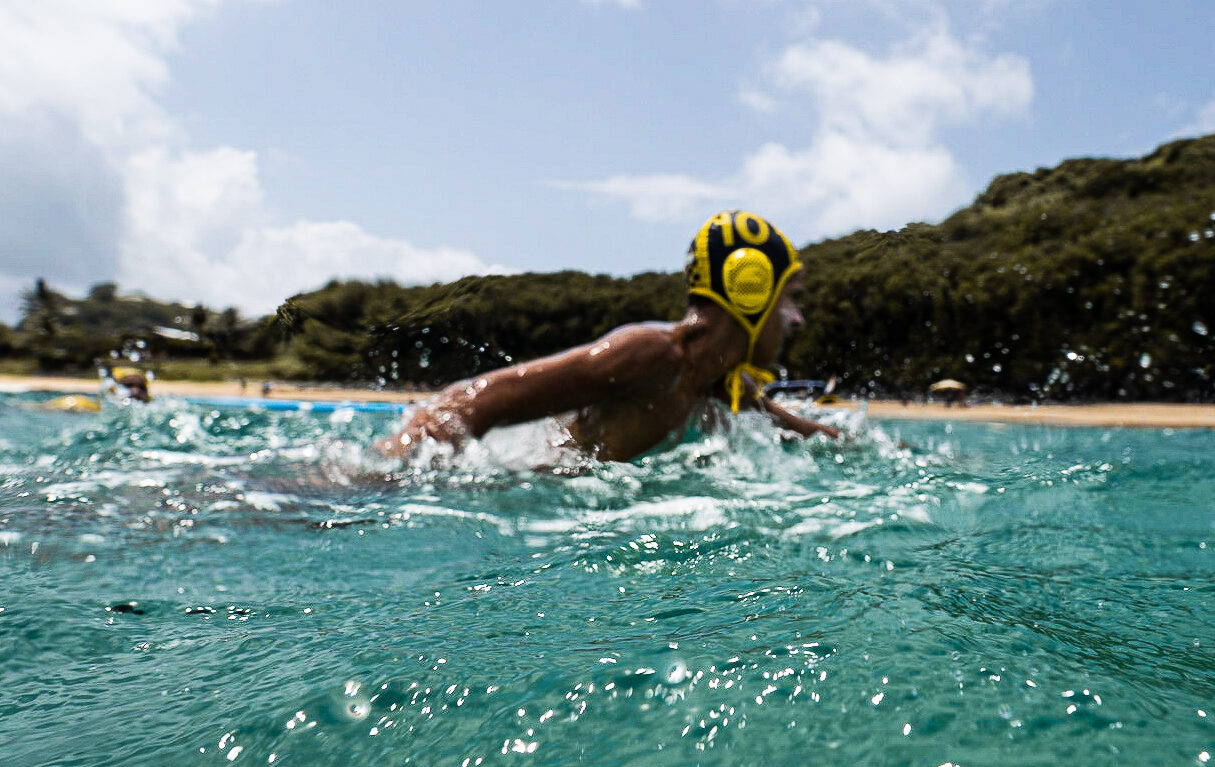
That’s why, at IMUA, the children’s class doesn’t feel like a class: it feels like beach play, playful swimming, “alligator” in the foam. Beneath the fun, the method works on body awareness, breathing, confidence, cooperation and a loving bond with nature.
And there’s a secret parents discover along the way: when the child enters the sea playing, the adult rediscovers their own childhood.
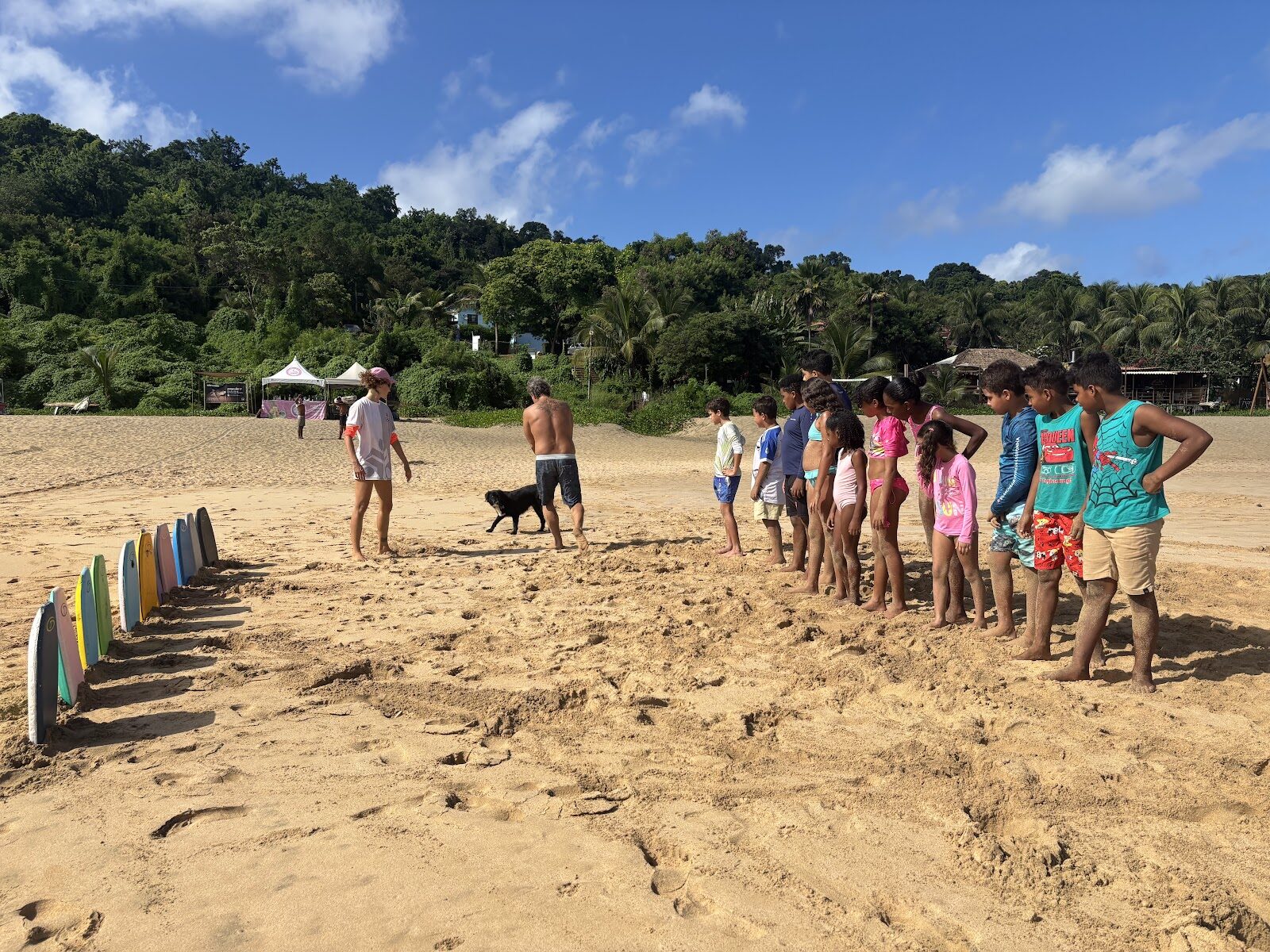
The shallow, sheltered water — the sea’s first backyard
Sea and Life
What the sea teaches in this phase
Confidence through the body
Floating, drifting, sliding through the foam — the security no words can teach.
Wonder
The fish, the wave and the wind become characters. Nature becomes a living story.
Belonging
Whoever plays in the sea learns early to care for it — the seed of ocean culture.
“The childhood that swims playing before it learns to fear the sea carries a wisdom that isn’t taught, it’s lived.”Seven-Year Cycles — Childhood
The Legend of the Golden Dolphin · Chapter I — The orphan of the lagoon
Children, in the voice of the Fishman
a story to read together · ~5 minutes
Once, in undescribed times, there lived an orphan dolphin, left on the edge of a beach where a small lagoon flowed out to sea. This little dolphin was found by a group of alligators who, astonishingly, treated him as a son, an equal. Over the years the dolphin believed himself to be an alligator, and behaved as one.
The alligators were known for their endurance in the water. They could enter and leave the sea whenever they wished, above and below the waves, without difficulty. The little dolphin learned such feats — and he learned the way every young one learns: by playing. He slid through the foam, rolled in the warm sand, held his breath to see who could last longest, chased little silver fish in the shallow water. To him, the sea wasn’t a dangerous place: it was a living backyard, full of good secrets.
· · ·
On the warm rocks at the shore, a mabuya — the island’s shiny little lizard — sunned herself all afternoon. “You don’t need to keep running all the time,” she’d say, unhurried. “Stay here a little while. Feel the rock holding you.” And the little one would stay, belly on the rock, heart beating slowly, learning without knowing he was learning: there is a security that doesn’t come from strength — it comes from feeling at home in the world.
The older alligators always entered the water first. And the little one imitated them, because that’s how the young learn: by the example of those they love. If the elder took a deep breath before the wave, he took a deep breath too. No one taught a class. No one needed to.
· · ·
What the little dolphin didn’t yet know — and didn’t need to know, because every discovery has its own tide — is that inside him lived a leap no alligator had ever known. One day he would discover it. But that’s a story for when he grows up.
Because every biography begins this way: we’re born into the school of fish that finds us, we’re taken in, and we play. And whoever plays in the sea from early on learns, without words, the lesson they carry for a whole lifetime: the water is vast, and I can trust it.
Excerpt from the original legend written by Henrique Pistilli. Read the full expanded legend · Continue the crossing: Children · Teens · Adults · Leaders · Wise Soul.
Ask the sea · from the IMUA Logbook
- What water game did the child you once were never forget?
- What does your family learn when you enter the sea together?
- What story from nature do you want to tell the next generation?
IMUA Logbook — 72 pages of reflective exercises, since 1996. Free, ask for yours.
“The sea is the first teacher.”IMUA · Escola do Mar · Noronha
Simbora — let’s go?
I want to take my family to the sea
Family Immersions · for residents, the Alma Solar (Solar Soul) is free, on Saturdays.